





Removing barriers, protecting rights
Citizens Rights Project awarded £2,687 by Network Rail Community Fund to help support migrants access vital rights, services, and opportunities.
Citizens Rights Project is a migrant-led charity providing tailored, multilingual support, advice and information to migrants across Scotland. Established in response to Brexit, it has particular expertise in supporting EU nationals and their families, while its services have expanded to support migrants more widely. Services include advice on immigration, access to public services and welfare rights, including benefits, housing, employment, healthcare and pensions, as well as workshops, outreach and training sessions on issues such as the EU Settlement Scheme and eVisas.
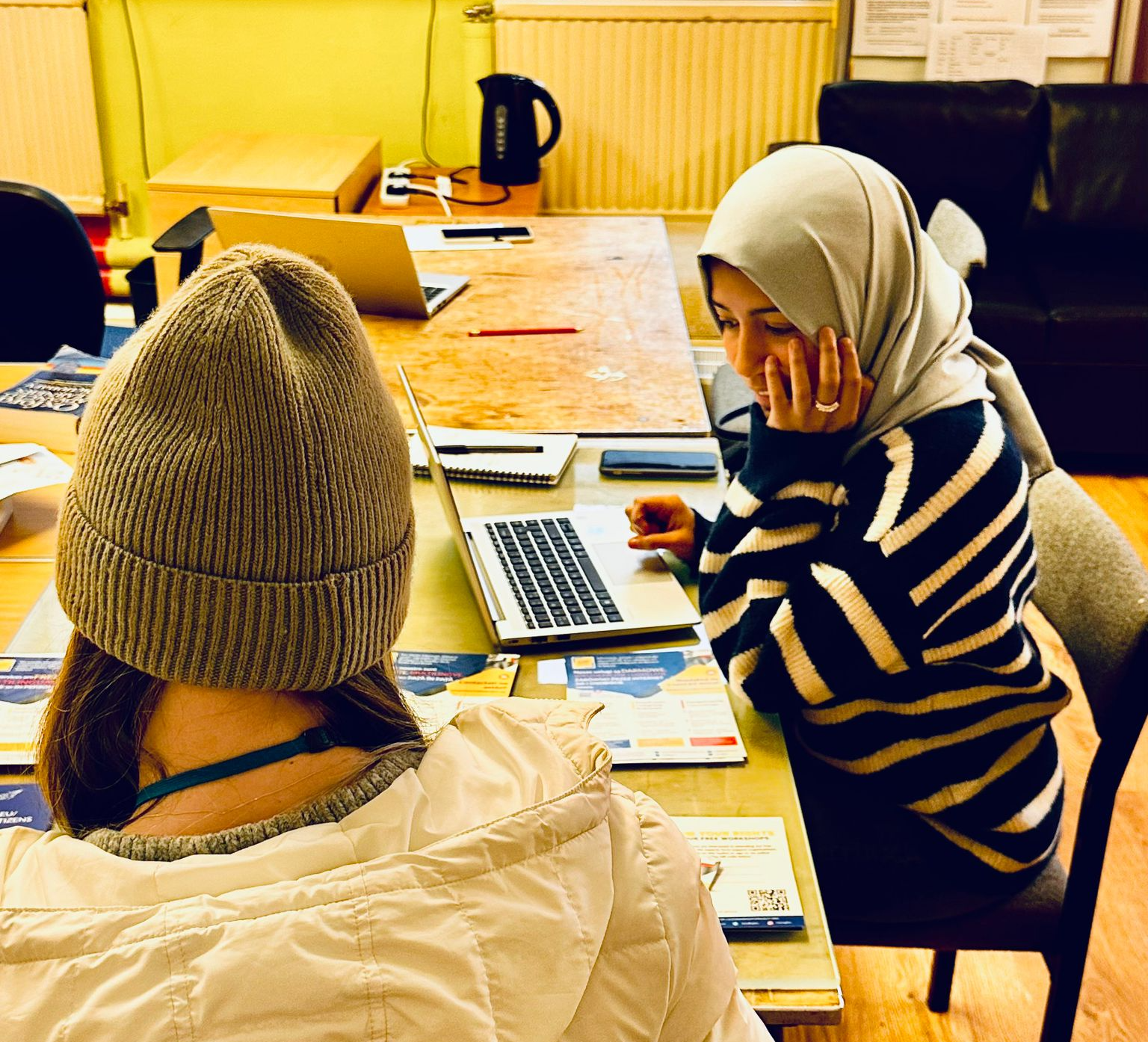 Each year, Citizens Rights Project supports thousands of people across Scotland through casework, enquiries, practical assistance, information and outreach. This includes direct and one-off support, queries, signposting and follow-up advice across immigration and welfare services, alongside a much wider reach through its online and printable resources, information sessions, workshops and outreach activities.
The organisation received £2,687 from the Network Rail Community Fund to continue its eVisa Transition Service to support migrants facing barriers with the digital-only eVisa system, particularly those with limited English and low IT skills, and those facing homelessness, poor health, and other barriers which make a digital only status inaccessible.
Delivered in partnership with organisations including Simon Community Scotland, Edinburgh Council Customer Hub, West of Scotland Regional Equality Council, Fife International Forum, and the Women's International Centre support was provided across five local authority areas: City of Edinburgh, Glasgow City, Fife, Dundee, and Inverclyde.
The service reached a diverse range of communities, with the highest number of individuals from Syria, alongside people from countries such as Yemen, Poland, Iran, Sudan, and others. This reflects both the broad geographical reach of the project and its ability to engage forty-nine individuals, primarily through face-to-face clinics, reducing digital exclusion and preventing loss of rights, employment, housing, benefits, healthcare, and travel opportunities.
One of the cases involved supporting a woman to update her passport details on her UK Visas and Immigration (UKVI) account. Previous support from another service had resulted in a second UKVI account being created, leaving her immigration status and passport information on separate accounts and preventing her from updating her records. The Project contacted the Home Office to have the duplicate account archived, allowing her to update her details and ensuring her digital immigration status remained accurate and accessible. This reduced the risk of future difficulties when proving her immigration status and gave her reassurance and clarity.
This next case highlights the ongoing need for accessible, knowledgeable support services, particularly during transitions to digital-only systems. It also demonstrates how delays in accessing appropriate support can place individuals at unnecessary risk, even when they are willing to comply with new requirements.
A family of five required support to create UKVI accounts and link their eVisas following the expiration of their Biometric Residence Permits (BRPs) in December 2024. The family had tried to transition to the digital system but after contacting multiple support organisations for assistance, they were either unfamiliar with the process or unable to provide the level of guidance required. This resulted in confusion, delays, and a lack of confidence in navigating what is a complex digital procedure.
The task of creating UKVI accounts and linking eVisas is detailed and can be time-consuming, particularly for individuals with limited digital literacy or language barriers. In this case, the complexity was compounded by the need to complete the process for five individuals, each requiring separate accounts, identity verification, and document checks and resolving issues such as mismatched details and forgotten login credentials,
Citizens Rights Project provided step-by-step support to each family member. This included setting up secure email addresses, registering UKVI accounts, verifying identities using official documents, and successfully linking everyone’s eVisa to their account. Additional time was taken to ensure the family understood how to access and use their accounts independently moving forward.
By the end of the intervention, all five family members had fully functional UKVI accounts with their eVisas correctly linked. They were also provided with guidance on how to prove their immigration status digitally and advised on maintaining access to their accounts.
Overall, the project supported individuals not only to resolve immediate technical issues but to participate more fully in society, by ensuring they could access their rights, navigate complex systems independently, and avoid the risks associated with digital exclusion. Future efforts will continue under Scottish Government funding, with plans to expand and enhance its services.
Read more about the Network Rail Community Fund