





Why local events matter
Community events play a significant role in bringing rural communities together, creating connections, supporting local groups and businesses, and strengthening people’s sense of belonging. But delivering these benefits takes time, volunteers and resources.
The following community stories showcase two important rural celebrations supported by the Nadara Glenkerie Wind Farm Community Fund. Together, they show how funding enables local people to plan and deliver events that are created for all ages to enjoy, while building the capacity and connections that sustain communities over time.
The Tinto Village DayCommittee has been organising the annual event since 2007. Each year in May, they bring together around 800 local people from Symington, Biggar and the surrounding rural villages. What began as a local gathering has grown into one of the most anticipated dates on the community calendar. It’s a great example of how a single, well-run village celebration can strengthen the social fabric of a rural area. In 2026, the Nadara Glenkerie Fund contributed £5,000 to support this much-loved annual event.
The Challenge: Isolation in Rural Scotland
Symington sits within the 6th/7th decile of the Scottish Index of Multiple Deprivation, with a geographic access ranking of 1, a reflection of just how rural and dispersed the area is. In small, dispersed communities like this, opportunities for people to come together in the same place at the same time are increasingly rare. The closest comparable gathering is roughly 3.5 miles away, a distance that can be enough to put it out of reach for some residents without transport. The Tinto Village Day addresses these barriers, bringing neighbours together in person, giving local groups the opportunity to raise their profile, and to help create the sense of shared identity that holds a village together.
A Free, Community-Built Event
Run entirely by volunteers and funded through community fundraising and local funders such as Nadara, the event brings together:
• Local families, drawn by free entry, inflatables, entertainment and food
• Community groups, including Scouts, Brownies, the Women's Royal Institute and Biggar Youth Project
• Local businesses, who support the event through sponsorship, in-kind contributions and advertising in the event programme
• Volunteers and Committee members, many of whom bring skills from other parts of village life
The event is hosted at Symington Football Club, keeping the whole operation rooted in existing community relationships rather than external contractors.
Most importantly, the event has remained free throughout its history. Committee members have reported that parents specifically value this, as it means no family is excluded because of cost.
The Impact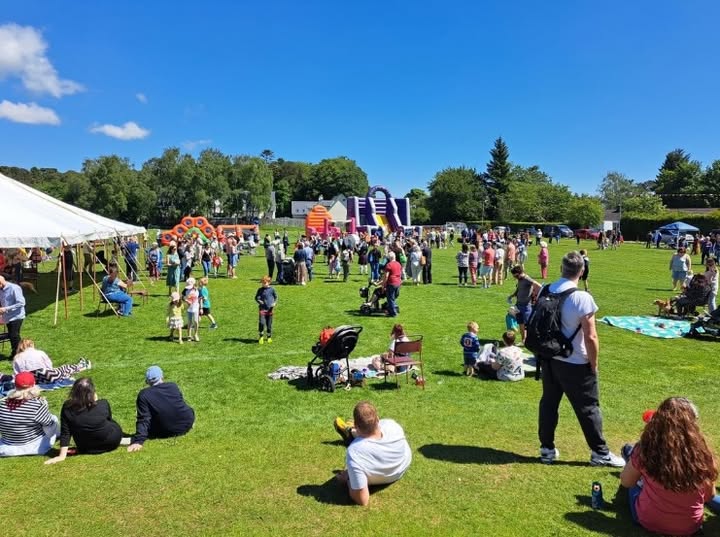 Around 800 residents directly benefit each year from a free, safe, local opportunity to socialise and around 100 people indirectly benefit, including volunteers and Committee members who gain events management experience, and local groups who raise their profile.
Local primary school children contribute to designing the event programme, building a sense of ownership and belonging from a young age and Local businesses gain a low-cost advertising channel, while contributing to something the whole village values.
The collective impact creates something much more than a single day out – the development of what's often called social capital, the networks, trust and reciprocity that make a community more resilient when it faces harder times.
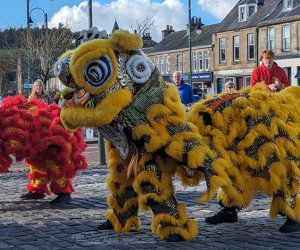
Biggar Little Festival is an annual community arts festival held in Biggar, South Lanarkshire, delivered around ten days each October. Now in its third decade, it brings together a large programme of events including music, theatre, comedy, exhibitions, walks and dance, and is produced by local community groups and a small number of touring artists. Run largely by volunteers, the festival is a well-established fixture in the town's cultural calendar, drawing both residents and visitors to the area.
The Nadara Glenkerie Wind Farm Community Fund provided its first grant to the Festival in 2016 and has awarded £55,882 to date supporting different phases in the development of the festival from support from core administration and planning capacity, to production and infrastructure, and more recently a broader team supporting promotion, social media and first aid provision.
Why Volunteer-Led Groups Could Benefit from Employing Paid Support
The festival is largely volunteer-run, but its funding history reflects a common sector pattern: sustainable growth often requires at least some paid capacity. This is a recognised stage in organisational development, not a shortfall in volunteering.
• Paid capacity enables growth, rather than simply rewarding growth already achieved.
• Volunteer time is finite and seasonal, while funding, supplier liaison, scheduling and bookings happen year-round.
• Paid support reduces burnout and turnover, retaining organisational memory and key relationships.
• Growing demands, including social media and technical production, require consistent attention that ad hoc volunteering cannot always provide.
Supporting staffing costs for volunteer-led groups is a well-established use of grant funding.
Why Repeat Applications Are Appropriate
Recurring events have recurring core costs; funding these is normal operating support, not duplication. Continued support for administrator posts (four grants across ten years) has provided continuity that a purely volunteer committee would struggle to sustain. And support has evolved from administration to production and a broader team, demonstrating a maturing event rather than a static funding request.
Why Full Self-Sustainability Is a Challenging Goal
For a community-focused festival, becoming fully self-funding is difficult. Local ticket and sponsorship income is limited, and increasing these could restrict access and dilute the festival's community character. Core costs are largely fixed, including administration, venue, production and safety, limiting economies of scale. The festival can benefit the whole town, including residents, businesses, visitors and artists - not only ticket buyers. Grant funding is therefore well suited to supporting these broader community benefits. Judging the festival primarily on self-sustainability risks undermining the openness and community ownership that make it valuable.
 Offering Community and Economic Value
Events like this one offer benefits related to social and wellbeing. They build local pride, bring people together and provide opportunities for local and aspiring artists. The Festival also reinforces Biggar's identity as a vibrant place to live, work and visit and benefits the local economy, increasing footfall for town-centre hospitality and retail. Funded roles also provide paid work and build local event-management capacity.
The Biggar Little Festival has grown steadily into a well-established highlight of the area’s cultural calendar. Sustained funding has helped that growth by providing the paid capacity, production quality and safety provision needed to complement volunteer leadership.
Rather than viewing repeat funding as dependency, it can be seen as ongoing investment in a community asset that delivers social, cultural and economic value to the wider area year after year.
The value of rural community events
Together, these events demonstrate a pattern seen across rural Scotland: where formal infrastructure and services can be limited, volunteer-led events create valuable opportunities for people to come together. They bring generations together, give local groups and businesses a platform, strengthen connections and create a sense of belonging. They also demonstrate how relatively modest investment can help local people turn their ideas into events that benefit the wider community.
For the Nadara Glenkerie Fund, supporting these events is therefore about more than funding individual days in the calendar. It is an investment in the relationships, skills, confidence and community connections that help rural communities thrive.