





Making an impact through education and training
64 individual residents have been awarded bursaries from the Corriemoille Education and Trianing Fund to help them access education and training courses.
Several awards were made towards engineering degrees, along with support for courses in marine science, maths, chemistry, and naval architecture. Several recipients were awarded support for driving lessons, an essential skill required to access most work and training opportunities in the rural fund area. As ever, there were some firsts for the fund – providing bursary awards for tall ship skipper training and a diploma in wine.
As well as funding individual bursaries for further education and short vocational training courses, the fund supports a diverse range of projects in the career aspiration strand. This supports activities that enable individuals to develop their career aspirations and journey, adding value to the area's statutory activities. This includes access to learning resources that support career aspirations, learning and development that increases employability, and activities that inspire and motivate individuals by developing links with prospective employers.
The following case studies highlight one recent example of this innovative approach, followed by three individual awards which help bring the fund's impact to life through personal stories.
Case Study: Ulluminate – shining a light on science and the arts in new community festival
Ulluminate CIC was formally established in April 2023 to develop and run an annual science and arts festival in Ullapool, which launched in May 2024. The aim was to find innovative and inspiring ways to explore science through the arts and the arts through science, to engage with a wide audience and encourage young people to study and work in the STEM sector.
Ulluminate was awarded a grant of £1,250 to contribute to the cost of the community outreach and an education day, which would open the inaugural science and arts festival, to help meet the costs of venue hire, accommodation and travel costs for some of the activity providers.
The Ulluminate team had an outstanding first day of Ulluminate Festival in 2024, with a science fair at Ullapool Village Hall that attracted over 100 primary school children from across the Associated Schools Group. They had several excellent exhibitors covering a range of subjects, including geology, bugs, the conservation work of community-owned Isle Martin, North Highland mammals, jellyfish, oyster catching, a careers in science exhibit and more.
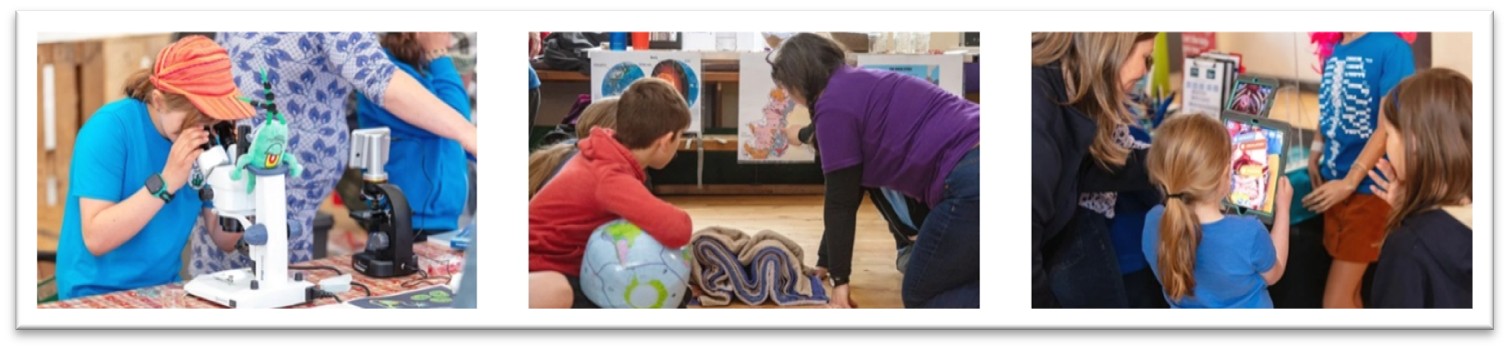
As this kind of opportunity is very hard to deliver for children growing up in remote rural areas, there was demand for a repeat event.
Volunteer organiser Mamta said:
“This was our first festival, and we learned much about the exhibitors and speakers that were most popular and engaging. We uncovered a strong vein of lay and expert interest among the local adult community in understanding the scientific basis for the technology, materials, processes underpinning their everyday lives. However, we also realised that the cost-of-living crisis affected the ability of many to pay for tickets and as the event approached, we decided to offer heavily discounted prices. Our learning from this is to next time offer a pay what you can scale.
We also realised the need, even in a small community, to establish a calendar of events to help promote upcoming events ahead of time and avoid clashes.
It is brilliant to have an education and training fund for our remote and rural area. It is hard to measure the long-term impact of being able to bring activities to young and older people [and] foster community pride in where we live and an understanding of our dependence and impact on our natural and man-made world. This connects to the social and economic welfare of the community, changing perceptions about the level of knowledge and engagement embedded here.” |
Case Study: Plain Sailing
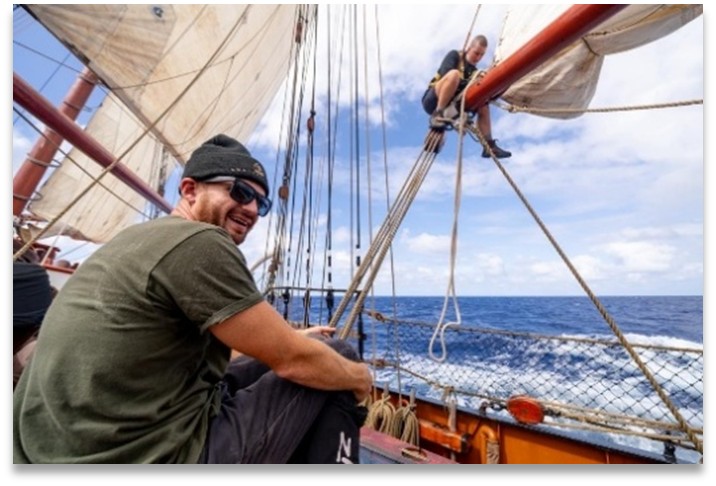 Matu, from Lochbroom, was a keen sailor who wished to make a career in sailing tall ships. He was a member of the Ullapool sailing club and gained much volunteer experience sailing on a Dutch ship and on a catamaran between New Zealand and the Cook Islands. Eager to turn his hobby into a career, Matu first applied to the fund in 2018, receiving £1,500.00 to study for a First Mate Certificate at the Enkhuizen Nautical College in the Netherlands, a specialist training provider for tall ships. He successfully completed this qualification and found employment as a First Mate.
Matu recently completed a two-year boat trip working in this position and, following his return, had a desire to expand on his theoretical knowledge and challenge himself to gain further qualifications.
He applied to the fund again in September for costs associated with completing a "Watch Officer Unlimited Sailing Area" course in order to qualify as a tall ship skipper, again taught at the Enkhuizen Nautical College, the only provider that offers this course.
Matu has taken a six-month career break in order to embark on the course, but upon completion will return to their employer, in a promoted position in the fund area. Matu acknowledged that the grant made completing the course a possibility, providing him with the necessary time he needed to focus on studying the course content.
Matu says:
| “In the coming years, I hope to take a captain’s role on more local ships to bring back the tall ship culture to the Highlands and inspire young people through youth programs.” |
Case Study: Safety First
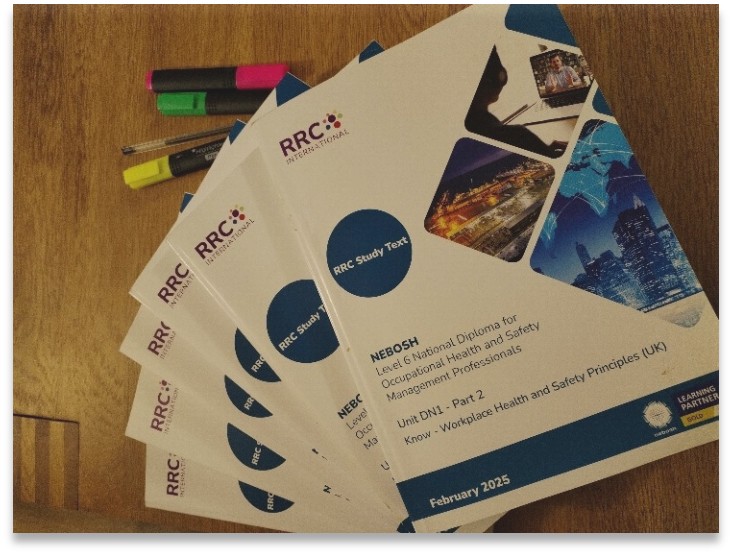 Alan, who resides in Marybank, made his first application to the fund in February 2025 to contribute to the fees of completing a NEBOSH (National Examination Board in Occupational Safety and Health) course.
In his most recent post, he had completed several qualifications, including an IOSH (Institute of Occupational Health and Safety) Managing Safely course. Due to his interest in health and safety, Alan was keen to find employment in this field and was advised of the necessity of a NEBOSH diploma to work in the sector. Alan’s funding application was approved in February, and he used the £1,500 grant to pay for a large proportion of the course fees.
He has now completed the first of three modules and has secured part-time employment with the Highland Council. He is on track to complete the course next year.
Of the impact that the funding has had, Alan stated:
| “At the time when I applied for the grant, I was unemployed…. the fund was a big help to get started on the course when finances were tight for us all at the time, and I am very grateful for this assistance from the Corriemoillie fund.” |
Case Study: Small Business Support
Jacqueline, who comes from the Contin area, received a grant of £1,000 in 2024 to contribute to the costs of completing a body piercing course, which she has since used to start her own piercing business.
Inspired by client enquiries and an enthusiasm to expand the services she offered, she applied for a second time in early 2025. She was awarded £375 towards a reflexology course.
Since becoming qualified, Jacqueline has been offering reflexology appointments in a fully accessible treatment room in the fund area and plans to offer a mobile service next year.
Jacqueline acknowledged the support of the fund:
| “I would not have been able to afford the training fee without the grant.” |
Foundation Scotland carried out a review of Education & Training support in the past year across all of the funds it helps support, which included a case study on the Corriemoilie fund, which is summarised in the report and can be read in full here.
Read more about the EDF power solutions Corriemoillie Wind Farm Education and Training Fund.