





Funding the Deep Time Trail at Siccar Point
How working closely with a grantee and trusting them to deliver helped bring a project of international significance to a small East Berwickshire community.
Siccar Point, a rural headland on the East Berwickshire coast, is one of the most important locations in the history of science. In 1788, James Hutton, farmer, philosopher, and founder of modern geology, stood at the point and found physical proof of his Theory of the Earth.
Hutton’s concept of ‘deep time’ challenged centuries of accepted wisdom and transformed scientific understanding of the Earth. Yet despite its global significance, Siccar Point remained difficult to find, poorly signposted, and challenging for non-specialists to understand. The project was timed to coincide with the tercentenary of Hutton’s birth on 3 June 2026, an internationally recognised milestone that would draw attention to both the scientist and the landscape that shaped his ideas.
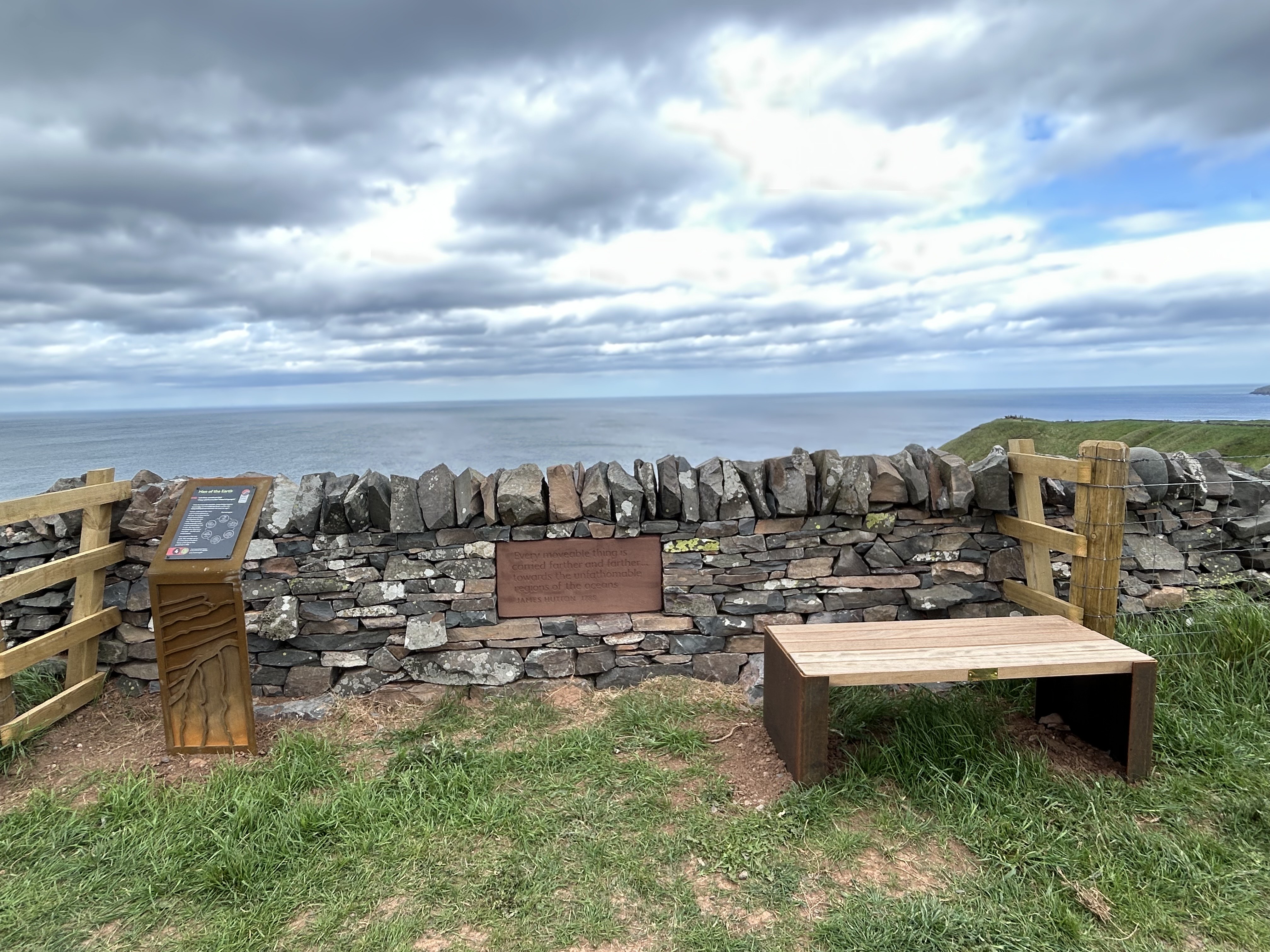 EGS applied to the Co’path & Cove Community Fund with a proposal that strongly aligned with the Fund’s priority of preserving, enhancing or giving better access to culture, heritage and the environment. The total project budget was £144,550, and EGS requested £72,550 from the Fund, with the remainder coming from a public Crowdfunder, the Society’s own reserves, and contributions from other funders, including £5,000 from the Drone Hill Community Fund. Assessment of the application highlighted strong support from the South of Scotland Destination Alliance, VisitScotland, Scottish Borders Council, and South of Scotland Enterprise. The project also aligned with the South of Scotland Responsible Tourism Strategy (2023–33), which identified the Hutton Tercentenary as an opportunity to attract higher-spending international visitors. The result was the Deep Time Trail, an accessible gateway for locals and visitors to explore and experience Siccar Point.
Alignment with the Community Action Plan
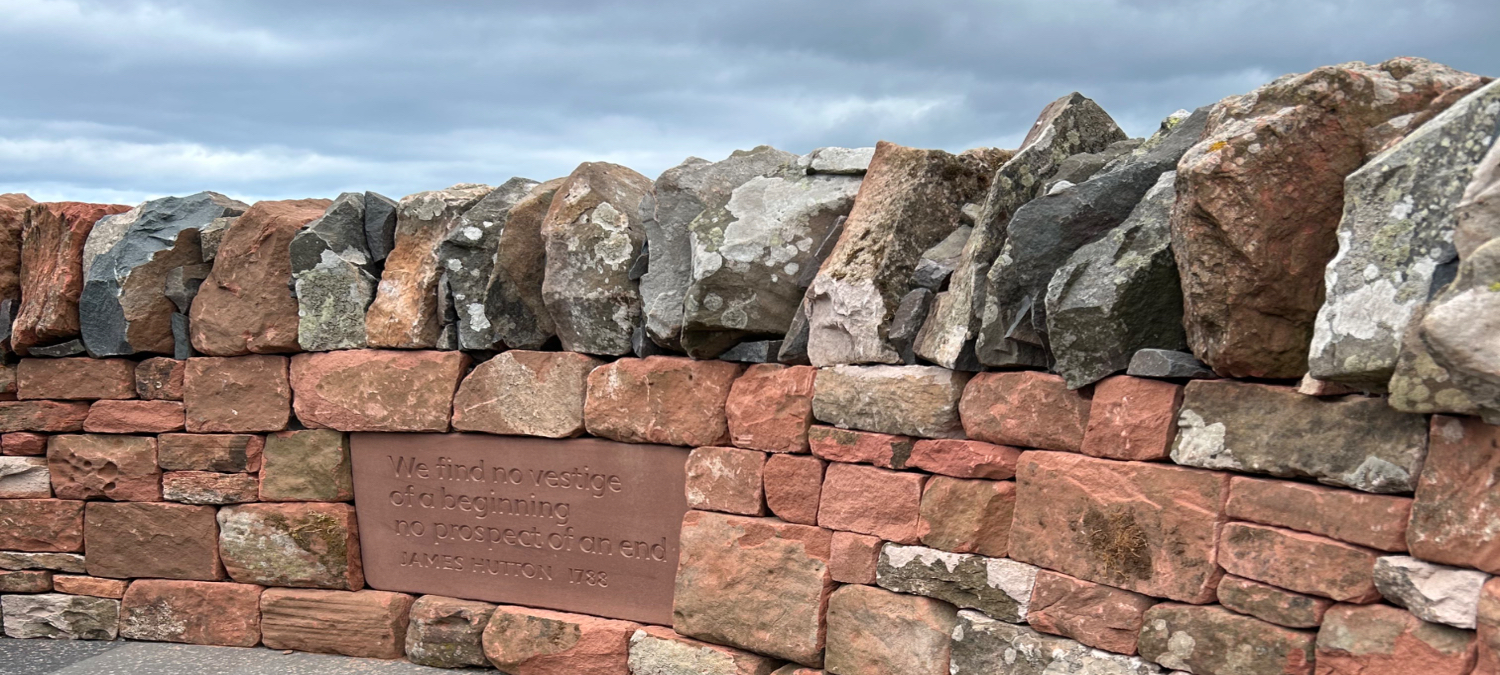 The Deep Time Trail also reflected priorities identified through the Cockburnspath and Cove Community Action Plan (CAP), the community-owned vision for the area's future. The CAP highlighted the importance of protecting and celebrating local heritage, improving access to significant sites, and supporting sustainable tourism that benefits the local economy while respecting the landscape. Residents also expressed a desire for better interpretation and signposting of local heritage assets, including Siccar Point.
By supporting a project that directly addressed these priorities, the Co’path & Cove Community Fund was able to translate community aspirations into tangible outcomes and ensure grant-making responded to locally identified needs and opportunities.
Why Community Action Plans matter
Community Action Plans provide an important link between local priorities and funding decisions. Developed through community consultation, they set out a shared vision and identify the issues and opportunities that matter most to local people. For community funds, CAPs offer a practical framework for decision-making, helping ensure investment reflects community aspirations rather than solely external priorities. The Deep Time Trail demonstrates this principle in practice. By funding a project rooted in the CAP, the Fund was able to support a development that was both locally valued and strategically significant.
What happened in practice
Like many ambitious community projects, the Deep Time Trail did not unfold exactly as planned. Several challenges emerged during delivery:
- Contractors with the specialist skills required for coastal and rural stonework proved difficult to secure within the required timescales.
- Planning permission processes with Scottish Borders Council took longer than anticipated, affecting the sequencing of physical works.
- Landowner negotiations, including finalising arrangements with a new farming tenant, required additional time.
These challenges were not signs of poor planning or project management. Rather, they reflected the realities of delivering a complex heritage project in a rural location while working towards a fixed public deadline.
How Foundation Scotland responded
Foundation Scotland’s approach was characterised by flexibility and a commitment to understanding what was happening on the ground rather than adhering rigidly to conditions set at the point of award. Where risks could be appropriately managed, funding was released early, allowing EGS to progress elements of the project that did not depend on planning permission, including interpretation content, panel design, and digital resources. This ensured momentum was maintained while formal approvals were being secured. As timelines evolved, Foundation Scotland maintained regular dialogue with the organisation, adjusting milestones and expectations in response to changing circumstances. The relationship remained focused on problem-solving and delivery rather than compliance and monitoring.
“We were delighted to receive this generous funding from the Cockburnspath & Cove Community Fund, which, combined with a successful Crowdfunder, means we can complete the Deep Time Trail and share Siccar Point, bringing its extraordinary story to life for visitors from across Scotland and around the world.”
Lessons for Open and Trusting Grant-Making
The Deep Time Trail provides a practical example of the principles championed by IVAR’s Open and Trusting Grant-making. Rather than viewing delays and changes as indicators of failure, Foundation Scotland recognised them as a normal part of delivering a complex project. This enabled honest conversations about challenges and created space for realistic adjustments when circumstances changed. Several aspects of the funding relationship reflected IVAR’s principles in practice:
- Proportionate requirements – reporting and oversight remained appropriate to the size and nature of the grant.
- Responsiveness to reality – milestones and expectations were adapted as delivery conditions evolved.
- Trust in the grantee – EGS was trusted to make sound decisions and manage risks effectively.
- Partnership working – regular communication supported collaborative problem-solving rather than transactional monitoring.
By focusing on outcomes rather than strict adherence to process, Foundation Scotland helped create the conditions for successful delivery while maintaining appropriate accountability.
Outcomes and impact
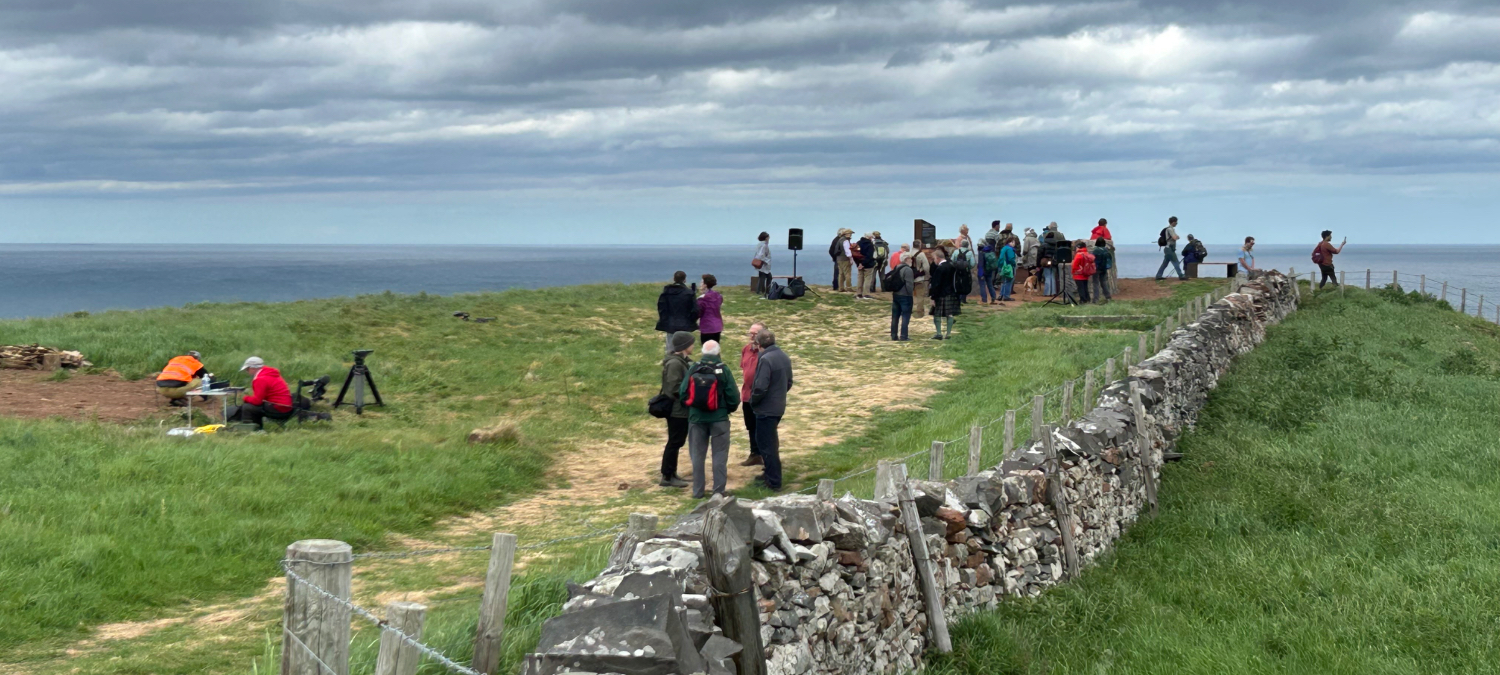
The trail is expected to attract between 2,000 and 5,000 visitors annually, including international visitors, walkers using the Southern Upland Way and Berwickshire Coastal Path, and local residents.
For the communities of Cockburnspath and Cove, the project has improved access to a globally significant heritage site, strengthened local pride, and enhanced understanding of the area's unique geological importance.
For EGS, the project has created a lasting asset that will be managed and maintained for at least the next decade through a long-term agreement with the landowner.
While the Co’path & Cove Community Fund formed only part of the overall funding package, the way in which that funding was administered made a difference to delivery. By working closely with the grantee, responding to changing circumstances, and maintaining a relationship based on trust, Foundation Scotland helped ensure that a project of international significance could be delivered on time and in full. The result is a lasting legacy for both local communities and visitors from around the world, and a clear example of how flexible, trust-based funding can support ambitious projects to achieve their full potential.
For more information please visit the Fund Information Page.