





Krishna Eco Farm's Garden to Gourmet Project
Support for the ‘Garden to Gourmet’ project demonstrates the value of community benefit funding in developing locally-driven initiatives adressing both food poverty and environmental considerations, whilst also boosting environmental awareness and volunteering.
ISKCON was awarded grant funding of £6,646.80 to contribute towards the purchase and installation of a Ridan Composting System, as part of its ‘Garden to Gourmet’ project to establish and demonstrate a closed-loop food growing system where food was grown, consumed, and resulting waste repurposed, to enrich the soil for further growing.
ISKCON (Scotland), a registered Scottish charity since 1988 and operating from an eco-farm near Lesmahagow since 2012. It is committed to nurturing both people and the planet, driven by passionate volunteers with a focus on two primary goals:
1. Promoting environmental sustainability and addressing climate change.
2. Enhancing the physical and emotional well-being of individuals through yoga, meditation and well-being retreats/festivals
The group successfully implemented the "Garden to Gourmet" project as part of its wider Food for Scotland programme. Their aim was to create a self-sustaining, circular food production system that would address local food poverty, while promoting sustainable living and organic farming practices.
The group successfully implemented the "Garden to Gourmet" project as part of its wider Food for Scotland programme. The initiative aimed to create a self-sustaining, circular food production system that would address local food poverty whilst promoting sustainable living and organic farming practices.
Background and Project Context
Parts of southern Lesmahagow and neighbouring Coalburn rank among the 10–30% most deprived areas in Scotland in terms of poverty and health outcomes. Since 2018, ISKCON (Scotland) has been providing free plant-based meals through its Food for Scotland programme, with demand increasing significantly during the COVID-19 pandemic. By the time of this project, the organisation had distributed over 100,000 meals, around 70% of which went to families across South Lanarkshire communities. However, the organisation identified that parts of its eco-farm were underutilised. The existing greenhouse, built over a decade earlier, had deteriorated to the point that heat loss was undermining the farm’s self-sustaining energy model, limiting its capacity for sustainable organic food production.
The project
The Garden to Gourmet project sought to establish a closed-loop system where food was grown, consumed, and resulting waste repurposed to enrich the soil through composting. The project aimed to:
- Address local health concerns and food insecurity
- Increase community involvement in and knowledge of organic farming and sustainable food production
- Expand local volunteering opportunities
- Demonstrate a self-sustaining food production model
- Reduce environmental impact through renewable energy and waste reduction
The project was awarded grant funding of £6,646.80 to contribute towards the cost to purchase and installation of a Ridan Composting System, complementing wider improvements including greenhouse roofing replacement, windmill repairs (funded through match funding from Lesmahagow Development Trust and South Lanarkshire Council), and partial salary costs for a project coordinator. The project benefited from extensive consultation with the community, volunteers and sustainability experts.
This consultation process shaped several key aspects of the project. Community and volunteer feedback highlighted strong interest in sustainable living, reinforcing the focus on plant-based meals and organic produce. Volunteers expressed eagerness for education in sustainable practices, leading to enhanced training programmes in organic farming. Collaboration with Bells boxing academy (another local community project aimed at improving youth engagement) help with meal deliveries and plan to engage local youth in the gardens. Collaborative workshops informed the eco-friendly design of facilities, and a partnerships with the CARES & EST Foundation enabled the installation of solar panels and windmills. Engagement with agricultural experts validated the organisation's organic farming techniques and composting systems.
To improve visibility within Lesmahagow and Coalburn, the group developed an outreach plan in partnership with Lesmahagow Development Trust, South Lanarkshire Council and Lanarkshire Climate Hub.
Outcomes and Impact
Once operational, the Ridan composting system was actively used to process both garden waste and food waste generated on-site. The system became integrated into a wider circular model, transforming waste into nutrient-rich compost used in the farm's gardens and greenhouses.
Over the first few months of operation, the project engaged 110 individuals, lower than the originally anticipated 500 due to the delayed installation. However, engagement grew steadily each month as the system became established. The project successfully increased climate-aware behaviour amongst participants. Volunteers developed clearer understanding of food waste's environmental impact and the value of circular systems, and following the Lanarkshire Climate Festival event at the Eco farm, many participants started composting at home and making more climate-conscious food choices. One volunteer commented: "I never realised how much food waste we throw away until I started helping with the composter. Now I separate my waste at home and try to buy only what I need."
The composter became a valuable teaching tool during tours, workshops and community events. Visitors reported that seeing the system in action made sustainable living feel more achievable.
Final thoughts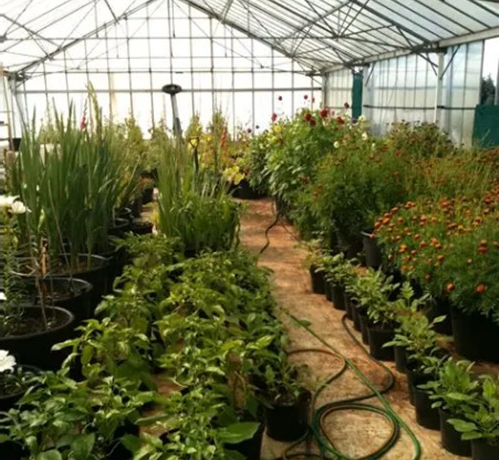 The Garden to Gourmet project demonstrated that community-led, circular food systems can deliver multiple benefits simultaneously: environmental sustainability, improved access to healthy food and local resilience, enhanced wellbeing, and increased climate literacy. Although operational for only a few months at the time of reporting, the Ridan composting system had already become an integral part of the farm's operations and a valuable tool for environmental education. The project served as a blueprint for sustainable agriculture initiatives, proving that modest interventions, when well-integrated into existing community infrastructure, can generate significant impacts.
With beneficiary numbers increasing each month, the project was well-positioned to reach its original targets whilst continuing to inspire climate-aware behaviour and strengthen community resilience. The model showed that sustainability, food security and community wellbeing are interconnected goals that can be advanced together through collaborative, practical action.
Read more about the ORIT Cumberhead Community Fund